Suit Alterations After Weight Change: What's Possible
Your body changed but you love your suits. Here's what can be altered, what has limits, and when it's time to consider a new garment.
You know the feeling—you pull on your favorite suit for a big client meeting, and suddenly the jacket feels like a tent or the trousers are cutting off your circulation.
It is a frustrating moment for any professional.
We see this every week in our studio, and it usually follows a season of hard work at the gym or a stressful few months of business travel.
Your wardrobe is a significant financial asset, especially here in California where professional standards are high.
We are going to walk you through exactly what can be salvaged, what needs to be retired, and the specific limits of alteration technology in 2026.
Let’s look at the data, the structural realities, and then explore a practical cost-benefit analysis to help you decide.
Weight Loss: Taking Things In
If you have dropped a few pounds, you are in a better position than most.
Taking a garment in is almost always easier than letting it out, but there are strict engineering limits.
What works well:
The “Two-Inch” Safe Zone
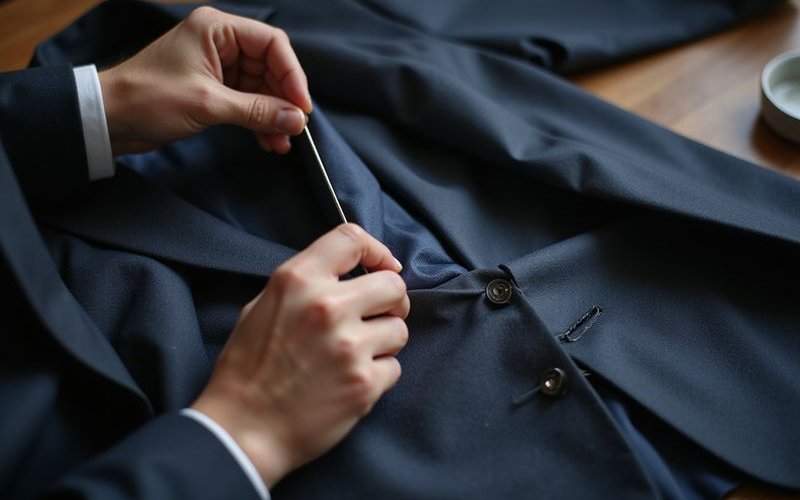
Taking in the jacket body: We can typically reduce a jacket’s circumference by taking in the side seams.
Most master tailors agree that 2 inches (approx. 5cm) is the safe maximum for waist reduction.
Our team finds that going beyond this limit often causes the side pockets to migrate toward the back of the jacket, ruining the visual balance.
Trousers and Seat Adjustments
Taking in trouser waist: This is the most common fix we perform.
A reduction of 1.5 to 2 inches at the rear center seam is standard and safe.
Reducing the waist by more than 3 inches usually requires “recutting” the entire trouser, which involves removing the waistband and pockets—a labor-intensive process that can cost $100-$150+.
Leg Tapering
Tapering trouser legs: Modern silhouettes favor a cleaner line.
If your legs have slimmed, we can taper from the inseam to remove that “excess fabric” look, provided we balance it with the hem width.
Shirt Adjustments
Taking in shirt bodies: This is a high-value alteration.
Custom or high-quality off-the-rack shirts can easily be darted or taken in at the side seams to eliminate the “muffin top” billow of fabric.
What has limits:
The Shoulder Anchor
Shoulder width: Your jacket hangs from the shoulders.
If your shoulders have shrunk significantly, the jacket will droop off your frame.
We rarely recommend narrowing shoulders because it requires rebuilding the entire upper jacket (costing $150+ in California) and rarely looks perfect.
Length and Balance
Jacket length: Shortening is possible but risky.
Removing more than an inch often throws off the “button stance” (the height of the top button) and leaves the pockets looking too close to the hem.
Armhole Distortion
Sleeve pitch: Weight loss changes your posture.
If the sleeves start rotating or “pitching” forward, fixing this requires removing and re-setting the sleeve, which is advanced surgery for a suit.
Weight Gain: Letting Things Out
If you have added muscle or a few “lifestyle pounds,” the situation is trickier.
You are entirely dependent on the foresight of the original manufacturer.
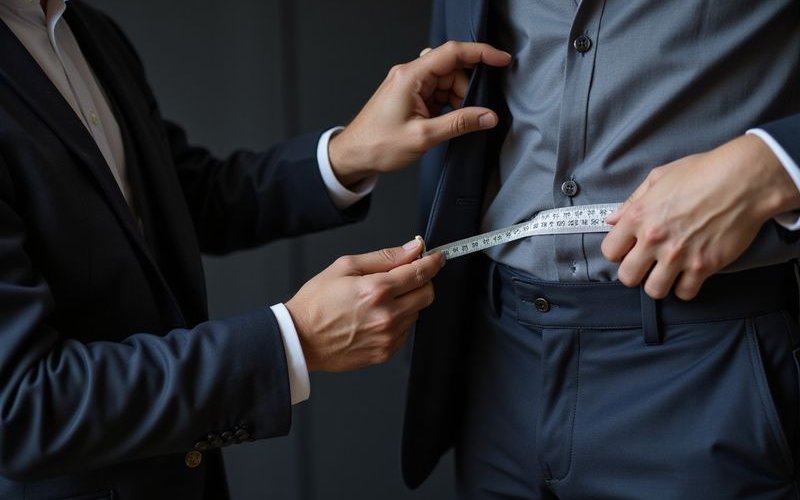
What works, conditionally:
The “Spare Tire” Allowance
Letting out jacket seams: We need to open the lining to check the “seam allowance” (extra fabric folded inside).
High-end Italian brands like Canali or Kiton often leave 0.5 to 1 inch of extra fabric for this exact purpose.
Mass-market brands often cut costs by leaving zero allowance, making expansion impossible.
Trouser Waist Expansion
Letting out trouser waist: The back center seam is your best hope.
Most quality trousers have enough material to let out the waist by 1 to 1.5 inches.
The “Ghost Stitch” Risk
Check for fade lines: Even if there is fabric available, the old seam might have left a permanent mark.
Dark navy and black wools are notorious for showing “ghost stitch” lines where the original seam was, which looks unprofessional in sunlight.
What usually doesn’t work:
Structural Limitations
Significant expansion: Trying to gain more than 1.5 inches usually distorts the drape.
The fabric will pull at the buttonhole, creating the dreaded “X” crease across your stomach.
Chest Constraints
Chest expansion: The chest piece is the heart of the suit’s structure.
Jackets generally cannot be let out in the chest area because the internal canvas and lapel construction are fixed in place.
The Shoulder Block
Shoulder expansion: This is a physical impossibility.
If the jacket is tight across your upper back or deltoids, no amount of tailoring can create fabric that does not exist.
The Critical Questions
When you bring us a suit after weight change, our assessment focuses on four key pillars:
1. The Magnitude of Change
How much change are we talking about?
We find that alterations are viable for weight changes of roughly 10-15 pounds.
Shifts of 20+ pounds (or 2+ sizes) usually change your body’s geometry too much for a standard alteration to fix.
2. Location of Weight
Where did the change occur?
Weight gain in the midsection is often fixable.
Gains in the neck, shoulders, or thighs are much harder to accommodate because those areas have complex structural points.
3. Construction Tier
What’s the garment’s construction quality?
A fully canvassed suit ($1,500+ value) is built to be altered.
Fused or glued suits (common in the $300-$500 range) often disintegrate or pucker when we try to move major structural seams.
4. Fabric Integrity
What condition is the fabric in?
We always perform a “Stress Test” by holding the trousers up to a strong light.
If the fabric in the seat or inner thighs is thinning or shiny, investing $100 in alterations is throwing good money after bad.
Realistic Expectations
I believe in being blunt about the Return on Investment (ROI).
Here is how the numbers stack up in the current market:
Best case scenario: You have a high-quality wool suit, and you need the waist taken in 1.5 inches.
- Result: The suit looks brand new.
- Cost: ~$60-$90.
Moderate scenario: You need the jacket sides tapered and the trouser waist let out max.
- Result: A wearable suit that looks 90% perfect.
- Cost: ~$120-$180.
Challenging scenario: You need shoulders narrowed or major length changes.
- Result: A jacket that fits “technically” but might look slightly off-balance.
- Cost: $200+.
Not feasible: The change is too dramatic, or the “ghost stitch” lines are visible.
- Result: A garment you will never feel confident wearing.
The Custom Tailoring Advantage
This is where investing in custom or made-to-measure garments pays dividends.
Patterns on file: If we made the original suit, we have your unique paper pattern.
We can often recut the pattern for your new measurements and sometimes even “re-make” parts of the suit if we saved the excess cloth.
Quality construction: Custom suits are built with “inlays”—generous extra fabric at critical seams.
This is a standard practice in traditional tailoring that anticipates your body changing over the next 10-20 years.
Fabric quality: Premium worsted wools (Super 110s-130s) are resilient.
They steam and press beautifully, hiding the signs of alteration much better than synthetic blends.
Ongoing relationship: We track your fit history.
Knowing exactly how your posture has shifted over time allows us to make micro-adjustments that off-the-rack tailors might miss.
When to Consider New Garments
Sometimes, the smartest business decision is to cut your losses.
We have compiled a quick cost-comparison guide for California professionals (2026 estimates):
| Alteration Type | Estimated Cost (CA) | Verdict |
|---|---|---|
| Simple Hem / Waist | $40 - $80 | Keep. High value. |
| Taper Jacket Sides | $60 - $120 | Keep. Transforms the look. |
| Recut Trousers | $100 - $160 | Review. Only for suits valued over $800. |
| Shoulder / Collar | $150 - $250+ | Replace. Put this money toward a new suit. |
If alterations would cost more than 50% of the garment’s current value: Do the math.
Spending $250 to alter a suit you bought for $500 three years ago is rarely a good investment.
If the result won’t satisfy you: Confidence is the primary function of a suit.
If you are constantly checking to see if a seam looks tight, that distraction will impact your professional presence.
If your weight is still changing: We strongly advise waiting until you have maintained a stable weight for 3 months.
Altering a suit twice weakens the fabric integrity with every stitch removal.
The Assessment Process
Bring your suits in for a professional alterations audit.
We follow a strict protocol:
- Interior Inspection: We open the lining to verify available seam allowances.
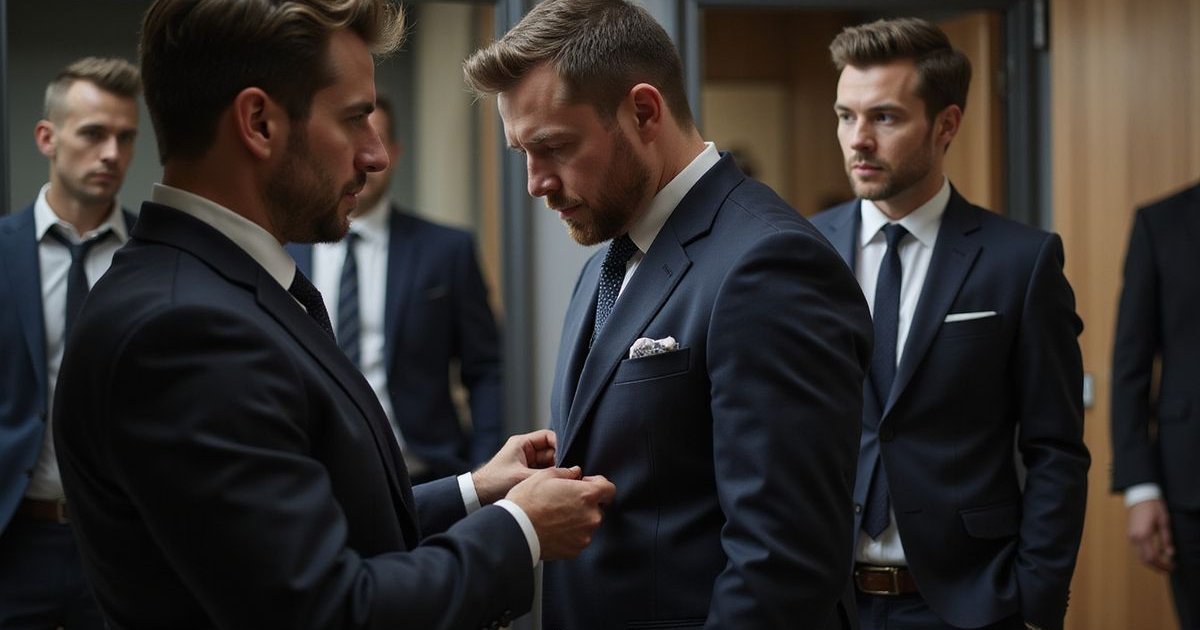
- Fit Analysis: You try the suit on so we can pin the “problem areas” in real-time.
- Feasibility Check: We discuss the structural limits (e.g., “If we take this in, the pocket will move”).
- Transparent Pricing: You get a line-item quote before we cut a single thread.
- Honest Verdict: We will tell you if the suit belongs in the donation bin.
There is no obligation to proceed.
Our goal is to ensure you look impeccable, whether that means fixing an old favorite or helping you find a new one.
Schedule your alteration consultation and let’s see what’s possible with your existing wardrobe.
David Finch
Master tailor with Savile Row training. David brings over a decade of bespoke craftsmanship to every garment.