The Perfect Dress Shirt Fit: What to Look For
A detailed guide to dress shirt fit. Learn how collar, cuff, and body should fit for a polished, professional appearance.
The dress shirt is the most frequently worn garment in many men’s wardrobes, yet it’s also the most commonly ill-fitted. A shirt that doesn’t fit properly undermines everything you wear over it.
You know the feeling—you catch a glimpse of yourself in the office window and notice the fabric ballooning at your waist. We see this daily with new clients who assume a sloppy fit is just the price of comfort. From what we’ve observed, that “muffin top” effect is usually the first sign your shirt measurements are based on outdated standards.
We’re going to break down exactly what a proper fit looks like in 2026, from the construction of the collar to the angle of the shoulder seam.
The Collar: Where Fit Is Most Visible
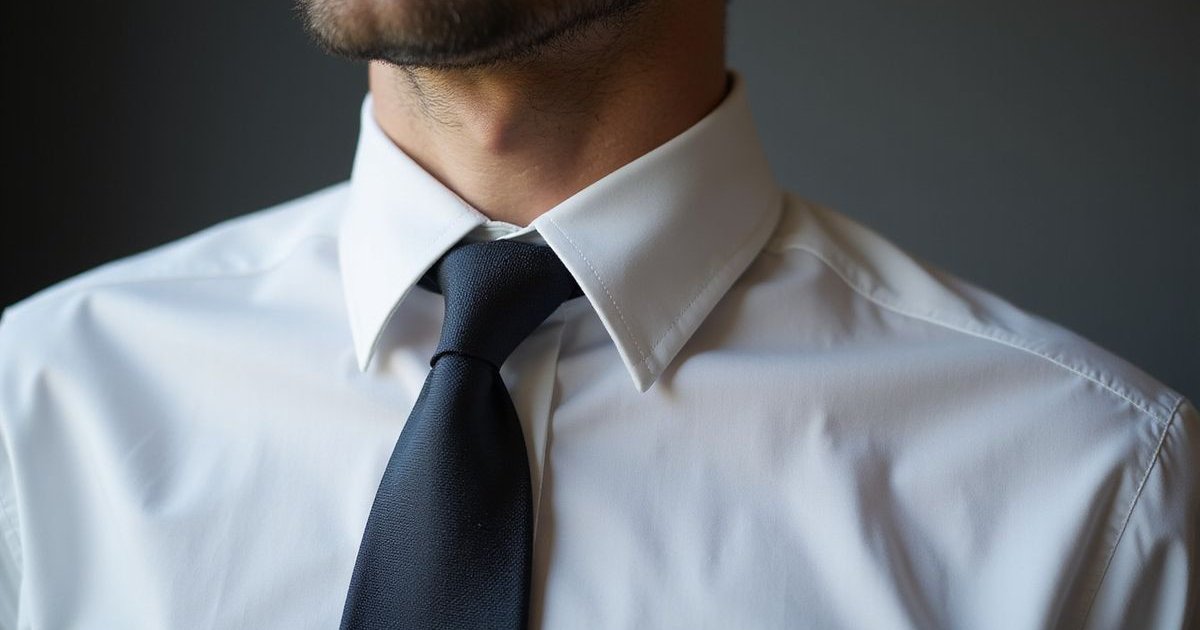
Your shirt collar is on constant display. It frames your face, holds your tie, and sits at the intersection of shirt and jacket.
We pay close attention to this area because getting it wrong is immediately noticeable. A study from Cornell University even found that 67% of men wear shirts with neck sizes that are too small. This isn’t just about style; tight collars have been linked to headaches and increased intraocular pressure.
Neck circumference: With the collar buttoned, you should be able to fit two fingers (comfortably, not forcing) between your neck and the collar band. One finger is too tight—you’ll feel strangled by midday. Three fingers is too loose—the collar will gap and look sloppy.
Construction quality: Check if the collar is “fused” (glued interlining) or “unfused” (stitched floating interlining). We generally recommend high-quality fused collars for a crisp, professional look that resists wrinkling, but cheap fusing often bubbles after a few washes—a defect known as “bacon collar.”
Collar height: The collar should stand tall enough that your jacket collar rests against it, not above or below it. When wearing a jacket, approximately half an inch of shirt collar should be visible above the jacket collar all the way around.
Collar points: The tips of the collar should lie flat against the shirt body and stay there. If they curl up or flip outward, the collar construction is poor or the collar style doesn’t suit the way you move.
The Shoulders
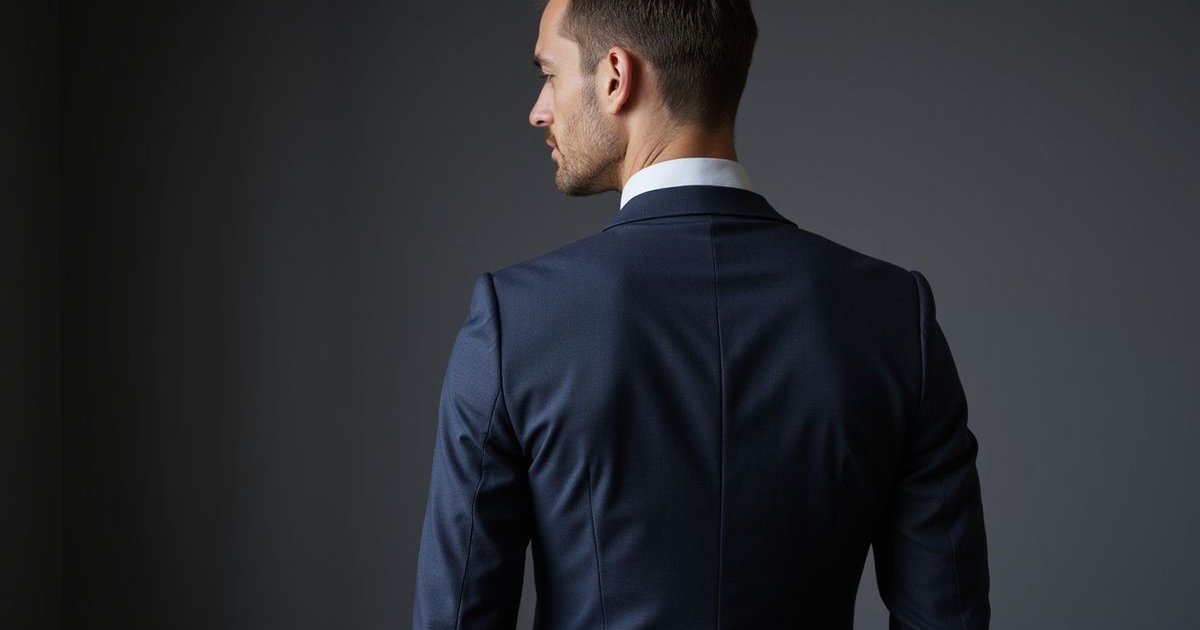
Like suit jackets, shirt shoulders have a seam that should sit at the point where your shoulder meets your arm—right at the edge of the shoulder bone.
We find that most off-the-rack shirts get this wrong by extending the seam too far down the arm to accommodate wider frames. If the seam sits on top of your arm (below the shoulder point), the shirt is too large. If the seam sits up on your shoulder (too close to your neck), the shirt is too small and will restrict movement.
The Split Yoke Advantage
Look at the fabric panel across the shoulders on the back of the shirt, known as the yoke. We recommend looking for a “split yoke,” where this panel is made of two pieces of fabric cut at an angle. This construction technique allows for more stretch and better range of motion than a single piece of fabric.

The Body: Neither Tent Nor Tourniquet
The body of a dress shirt should follow your torso without clinging or billowing.
Understanding “Ease”: The difference between your actual chest measurement and the shirt’s fabric measurement is called “ease.” We typically aim for 3-4 inches of ease for a clean, professional fit. Most standard “Classic Fit” shirts have 6-8 inches of ease, which creates that billowing tent effect.
| Fit Type | Chest Ease (Inches) | Best For |
|---|---|---|
| Slim Fit | 3” - 4” | Athletic builds, modern professional look |
| Classic Fit | 5” - 6” | Larger builds, comfort-first preference |
| Vintage/Standard | 7” - 9” | Rarely flattering; creates excess fabric |
When tucked: A properly fitted shirt, tucked into trousers, should have minimal excess fabric. You shouldn’t be tucking in handfuls of material, and you shouldn’t see bulging around your waist.
When standing: Lift your arms above your head. The shirt should stay tucked. If it pulls out easily, the body is too short or the armholes are too low.
When sitting: Sit down and check the button line down the front. If buttons are straining or the placket is pulling apart, the body is too tight. If fabric is pooling in your lap, the body is too full.
The ideal? Enough room to move, sit, and breathe comfortably—but no more. Modern professional dress favors a trimmer silhouette than the baggy shirts of decades past.
The Chest and Waist
Beyond overall body fit, pay attention to the chest and waist specifically:
Chest: With your arms at your sides, the fabric across your chest should lie flat without pulling. No X-shaped creases at the buttons. No excess fabric billowing.
Waist suppression: Better dress shirts are cut with some waist suppression—meaning they’re narrower through the midsection than through the chest. This prevents the “parachute effect” of excess fabric at the waist.
We often use back darts (two vertical seams sewn into the back) to pull in excess fabric for clients with an athletic drop (broad shoulders, narrow waist). Off-the-rack shirts are often cut straight from chest to hem, accommodating the widest possible range of body types but flattering almost no one. Custom shirts can be cut to follow your specific taper from chest to waist.
The Sleeves
Length: With your arms hanging naturally at your sides, the sleeve should end at your wrist bone—at the base of your thumb, where your hand meets your wrist. When wearing a jacket, approximately half an inch of shirt cuff should be visible below the jacket sleeve.
Shrinkage factor: High-quality cotton shrinks. We advise clients to account for 1-3% shrinkage (about 0.5 inches) in sleeve length over the first few washes.
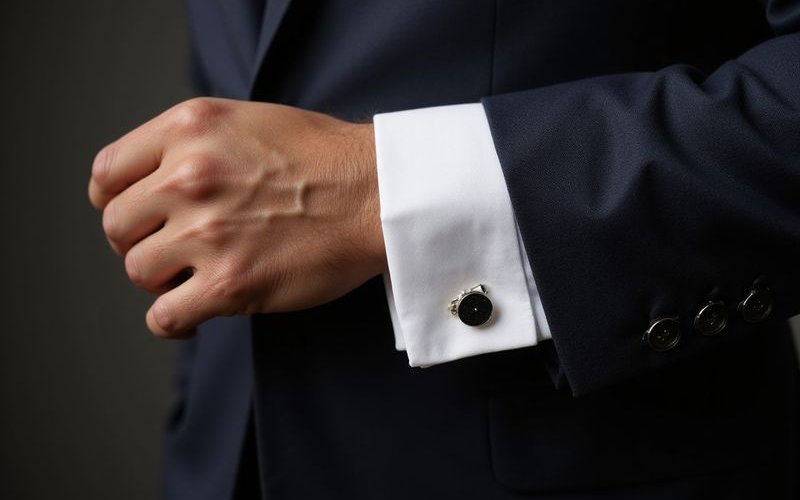
Width: The sleeve should have enough room to slide easily over your forearm but shouldn’t billow. When you bend your arm, you shouldn’t see excessive bunching at the elbow.
Armhole position: The armhole should sit close to your armpit—not dropping down your arm. A high armhole allows better range of motion and a cleaner look. This is one area where custom shirts excel; off-the-rack shirts often have dropped armholes (the “flying squirrel” effect) which causes the shirt to untuck every time you raise your hand.
The Cuffs
Fit: Your cuff should be snug enough that it doesn’t slide over your hand when unbuttoned, but loose enough to accommodate a watch and move freely on your wrist. When buttoned, you should be able to fit a finger inside comfortably.
Watch clearance: If you wear a substantial timepiece, you need extra room. We recommend adding 0.5 to 0.75 inches to the cuff circumference on your watch wrist to prevent the cuff from getting stuck above the watch face.
Length: The cuff should cover your wrist bone. When wearing a jacket, the cuff should extend approximately half an inch beyond the jacket sleeve.
Style consideration: Barrel cuffs (with buttons) are standard for business wear. French cuffs (requiring cufflinks) are dressier and often slightly longer to show more when wearing cufflinks.
The Back
Lift your arms forward, as if reaching for a steering wheel. The back of the shirt should allow this movement without pulling out of your trousers or binding across your shoulders.
A shirt with a well-placed back pleat (box pleat or side pleats) accommodates movement better than a flat back. The pleat should lie flat when you’re standing normally, opening only when you reach or move.
Common Fit Problems (and What Causes Them)
Collar gap: The collar stands away from your neck, especially at the back. Usually caused by a collar band that’s too big or a collar point that’s too long for your neck shape.
Shoulder divots: Small dips or creases where the sleeve meets the shoulder. Indicates the shoulder seam position is wrong for your shoulder shape.
Billowing waist: Excess fabric at the waist when tucked. The shirt body has insufficient waist suppression for your build.
Cuff too long or short: Off-the-rack sleeves come in set lengths that may not match your arm. Custom shirts solve this precisely.
Pulling placket: The button line pulls apart between buttons, especially when seated. The chest or waist is too tight.
Why Custom Shirts Solve These Problems
Off-the-rack shirts are designed to fit as many bodies as possible, which means they truly fit almost no one. A “15.5/34” shirt assumes specific neck, sleeve, chest, waist, and body length proportions—and if your body differs from those assumptions, you’re out of luck.
Custom shirts take your actual measurements and construct a shirt specifically for your body:
- Collar sized precisely: No more headaches from tight collars or sloppy gaps from loose ones.
- Sleeves cut to length: We adjust for left/right arm discrepancies, which are more common than you’d think.
- Body tapered correctly: No more “muffin top” or billowing fabric at the waist.
- Shoulder seams positioned: The yoke sits exactly on your shoulder bone.
- Armholes placed correctly: High armholes prevent the shirt from untucking when you move.
The result is a shirt that fits everywhere, not just in one or two dimensions.
Making the Investment
A custom shirt from Finch & Co. starts at $195—more than a department store shirt, less than you might expect. We encourage you to look at the total cost of ownership; buying an $80 shirt and paying a tailor $45-$65 for alterations often ends up costing nearly as much as going custom in the first place.
Many of our clients find that once they experience custom shirt fit, returning to off-the-rack becomes difficult. The shirts you already own suddenly feel sloppy by comparison.
If you’re curious about what properly fitted dress shirts feel like, book a consultation. We’ll take your measurements, discuss fabric options, and show you how much better a shirt can fit when it’s made specifically for your body.
David Finch
Master tailor with Savile Row training. David brings over a decade of bespoke craftsmanship to every garment.