How a Suit Should Actually Fit: The Complete Guide
Learn the key fit points every well-dressed man should know. From shoulder seams to trouser break, understand what separates a good fit from a perfect one.
A well-fitting suit transforms how you carry yourself. It influences how clients and partners perceive your authority and, more importantly, how you feel in your own skin.
We often see business owners and professionals view tailoring as a secondary concern. This oversight is a missed opportunity. Our team has analyzed thousands of fittings, and we have found that fit is the primary driver of a polished appearance.
Let’s examine the specific checkpoints that separate a standard garment from a professional asset.
The Shoulders: Where Everything Begins
The shoulder is the foundation of jacket fit. Get this wrong, and the entire silhouette collapses.
The Seam Position: We look for the shoulder seam to end exactly where your natural shoulder ends. It should sit right at the pivot point where your arm begins. A seam falling past this point makes the jacket look like a hand-me-down. A seam sitting too high creates a constricted, pinched appearance.
The Lie of the Fabric: You should inspect the area between your neck and the shoulder seam. The fabric must lie flat and smooth against your body. Ripples or bunching here indicate that the “shoulder pitch” does not match your posture.
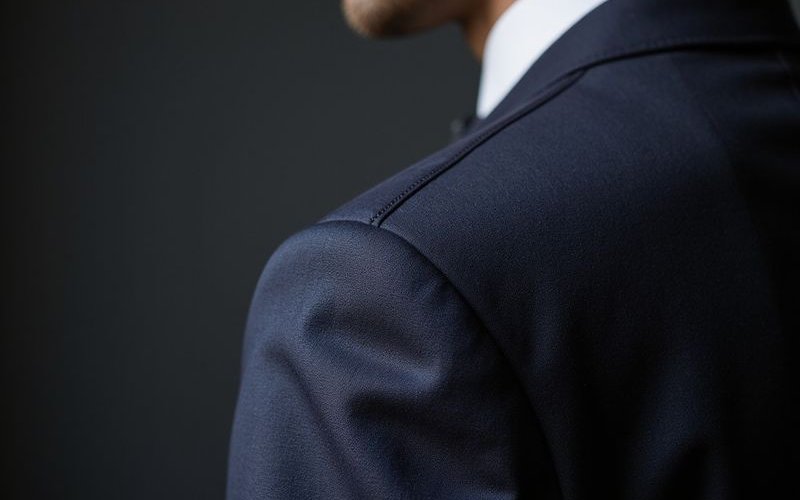
The Drape into the Arm: We check for divots, dimples, or creases where the sleeve head meets the shoulder. These defects signal a mismatch between the armhole shape and your arm’s natural resting position.
Why Custom Adjustments Matter: Our fitters know that shoulder width is the one area that is nearly impossible to alter later. Structural changes here require rebuilding the entire jacket. You must prioritize shoulder fit above all else when selecting a size.
The Collar and Neck
Run your finger along the back of your neck where it meets the jacket collar. The collar should rest gently against your shirt collar.
The Ideal Ratio: We recommend showing approximately half an inch of shirt collar above the jacket collar. This creates a clean transition between the garments.
The “Collar Gap” Issue: A visible space between your neck and the jacket collar is a major defect. It means the jacket collar stands away from your neck rather than hugging it. Approximately 60% of off-the-rack jackets suffer from this issue.
Collar Roll: The collar should roll smoothly from the lapel into the back of your neck. Puckering or lifting here suggests poor construction or a posture mismatch.
The Chest and Torso
When properly fitted, you should be able to slip your flat hand between the buttoned jacket and your chest. You should not be able to pull the jacket away from your body more than that.
The “X” Warning Sign: We watch for horizontal tension lines radiating from the button. If the jacket creates an “X-shaped” crease when buttoned, it is too tight. Excess fabric hanging loosely means it is too large.
Button Stance Importance: The position of the top button (on a two-button suit) dictates your visual proportions. It should generally sit one to two inches above your navel. A well-placed button stance elongates the torso and balances your frame.
The Back
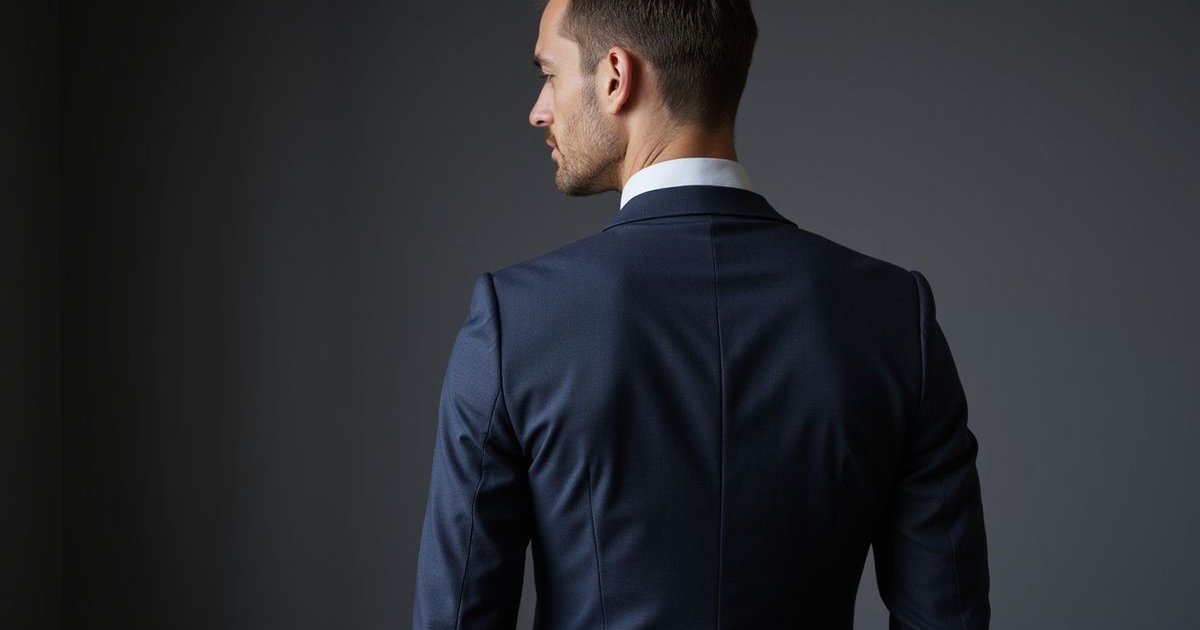
View your jacket from behind using a three-way mirror. You are looking for a clean drape.
Fabric Behavior: We ensure there are no horizontal ripples below the collar or vertical folds near the armholes. The fabric should fall cleanly from your shoulder blades to the hem.
Vent Mechanics: Double vents should lie flat when you stand with your arms at your sides. If the vents pull open to reveal your trousers, the jacket is tight through the hips. This is a common issue for athletic builds.
Jacket Length Guidelines
Classic tailoring dictates that a jacket should cover the curvature of your seat. It should end where your thumb knuckle sits when your arms hang naturally.
Modern vs. Classic: We have noticed that shorter jackets are trending in California business hubs, but going too short looks amateurish. A jacket that is too long can make your legs appear shorter.
Proportion is Key: Your height and torso length dictate the rules here. A taller man often needs a longer jacket to balance his legs. A shorter man benefits from a slightly shorter cut to maximize leg line.
The Sleeves
Sleeve Length: With your arms hanging naturally, the jacket sleeve should end at your wrist bone. This allows about a quarter to half an inch of shirt cuff to show.
The “Handshake” Test: We check that the sleeve tapers naturally toward your wrist without gripping it. You should be able to shake hands or check your watch without the sleeve riding up to your elbow.
Financial Context for Sleeve Alterations
Shortening sleeves is a standard procedure, but costs vary by construction.
| Type of Adjustment | Estimated Cost (CA Region) | Notes |
|---|---|---|
| Plain Hem | $45 - $65 | Simple shortening from the cuff. |
| Working Buttonholes | $90 - $150 | Requires shortening from the shoulder. |
| Lengthening | $50 - $70 | Limited by available fabric allowance. |
The Trousers: A Critical Component
Many men focus entirely on the jacket and ignore the trousers. This creates an unbalanced look.
Waist Position: We advise wearing dress trousers at your natural waist, which is near the navel. This is higher than where casual denim sits. Wearing suit trousers on the hips leads to sagging in the seat.
Seat and Thigh Fit: The fabric should trace the line of your body without gripping. You need enough room to sit comfortably without fear of splitting a seam.
Understanding “The Break”
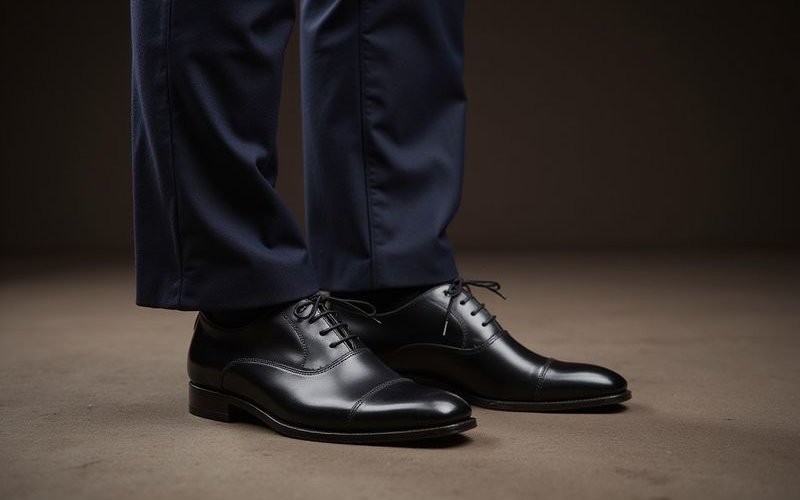
The “break” refers to how much the trouser fabric folds where it meets your shoe.
No Break: The trouser hem barely touches the top of the shoe. This is a clean, modern look popular in tech and creative industries. It requires a slimmer leg opening and shorter length.
Half Break: A slight fold appears where the hem hits the shoe. We consider this the safest and most professional choice for general business environments.
Full Break: A significant fold of fabric rests on the shoe. This is a traditional style but can look sloppy if the trousers are too baggy.
Fit Is Personal
These guidelines provide the technical foundation. Your personal preference dictates the final details.
We encourage you to prioritize intentionality. A suit looks best when it aligns with your body mechanics and professional environment. The goal is to enhance your natural build rather than mask it.
When Fit Isn’t Working
If your current wardrobe fails these checkpoints, you have three main paths forward.
Alterations
A skilled tailor can refine an existing garment. We often adjust sleeve lengths, waistlines, and trouser hems for our clients. However, remember that shoulders and body length are rarely worth the cost to alter.
Made-to-Measure
This option allows you to modify a standard pattern. You get a better fit than off-the-rack options. It works well if your proportions are relatively standard but you want specific fabrics or details.
Fully Custom
A bespoke suit is built from a completely unique pattern for your body. Every angle, slope, and measurement is accounted for. This is the only way to accommodate significant asymmetries or specific posture needs.
The Fit That Becomes Invisible
The ultimate test of a great suit is that you forget you are wearing it. A correct fit removes the physical distractions of tight armholes or slipping waistbands.
We want you to button your jacket and see a clean, commanding silhouette. That confidence translates directly into your business interactions.
If you are ready to elevate your professional image, Book a consultation and let us help you find the precision fit your role demands.
David Finch
Master tailor with Savile Row training. David brings over a decade of bespoke craftsmanship to every garment.