A Guide to Dress Shirt Collar Styles
From spread to button-down: understanding collar styles and which works best for your face shape, tie choice, and occasions.
A Guide to Dress Shirt Collar Styles
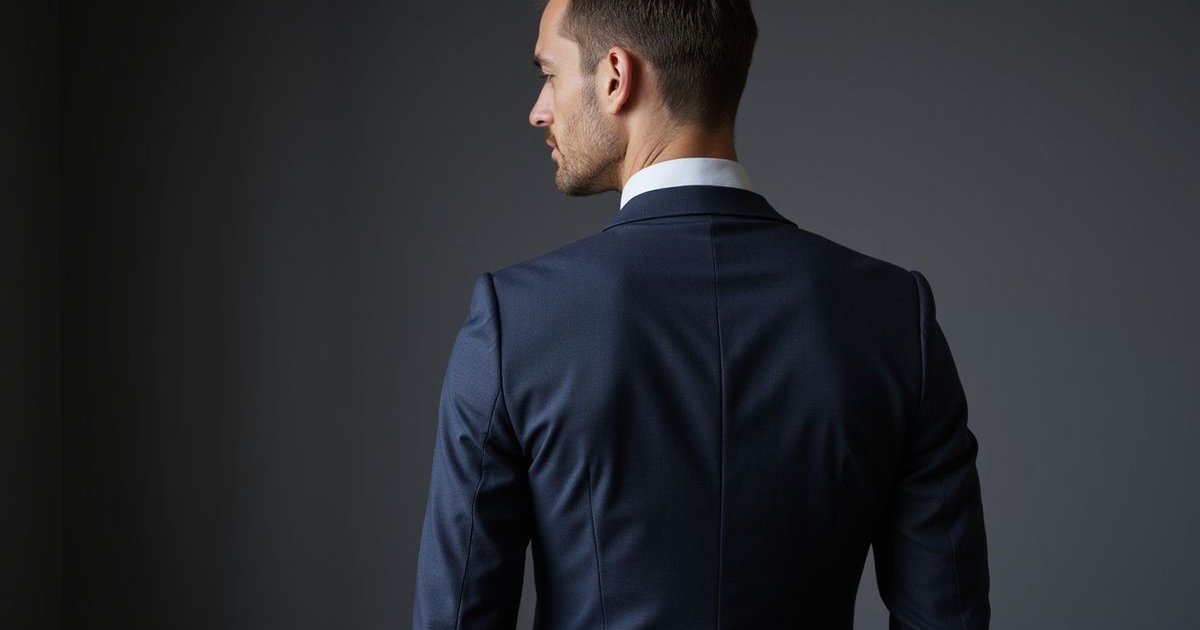
The collar is the most visible part of a dress shirt, framing your face and anchoring your tie. Yet most professionals we speak with give little thought to collar style, usually defaulting to whatever comes standard on the rack.
We see this often: a sharp suit and expensive tie undermined by a collar that doesn’t fit the wearer’s face shape or knot size.
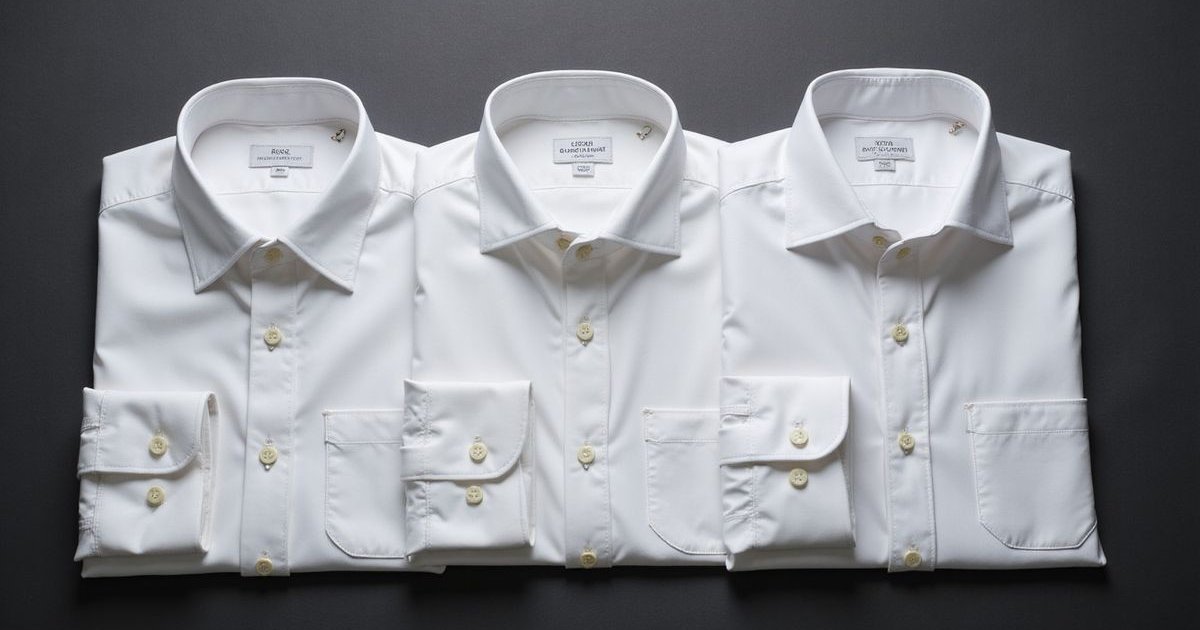
It’s a subtle detail, but the right collar choice acts as a visual anchor that commands attention in a boardroom or on a video call. This guide breaks down the architecture of collar styles so you can make intentional choices that complement your features.
Let’s examine the major collar styles and when each works best.
The Spread Collar
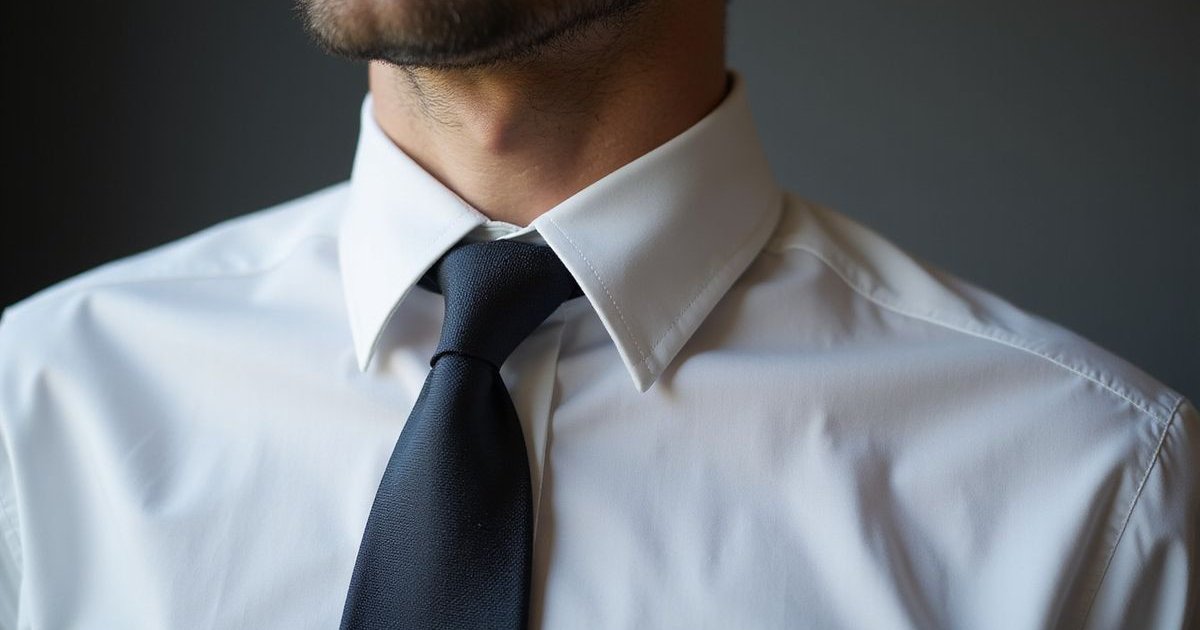
The spread collar features points that angle outward, creating a wide opening at the neck. We find this to be the most dominant style in modern business wear, particularly in Europe and increasingly in North American finance hubs.
Technically speaking, the “spread” refers to the distance between the collar points, which typically creates an angle between 90 and 120 degrees. This width serves a specific mechanical purpose beyond just aesthetics.

Best for:
- Narrow or Long Faces: The horizontal lines of the spread visually widen the face, balancing out vertical features.
- Thick Neckties: Heavier fabrics like wool or cashmere need the extra room this collar provides.
- Complex Knots: The wider gap perfectly frames a Full Windsor or double knot without crowding.
- Corporate Power Dressing: It signals a confident, continental aesthetic.
Considerations:
- Knot Size Matters: You cannot wear a small, thin tie knot here; it will look lost in the wide gap.
- Jacket Lapels: Ensure the collar points are long enough to tuck under your jacket lapels for a clean finish.
The spread collar essentially became the standard-bearer for modern professionalism because of its versatility. It accommodates the shift toward broader, more assertive jacket lapels we see in current trends.
The Point Collar
The point collar features straight, elongated points that angle downward toward the chest with a spread of usually less than 60 degrees. This is often called the “Straight Point” or “Forward Point” and remains the classic American business standard.
We often recommend this style to clients who prefer a traditional, no-nonsense look that focuses attention directly on the face. Because the points are closer together, they direct the viewer’s eye vertically rather than horizontally.
Best for:
- Round or Wide Faces: The vertical orientation elongates facial features, having a slimming effect.
- Small to Medium Knots: The Four-in-Hand or Prince Albert knots sit securely in the narrow opening.
- Traditional Industries: It remains a staple in conservative legal and government sectors.
- Jacket Stability: The points are less likely to slip out from under a jacket lapel when moving.
Considerations:
- Collar Stays Are Mandatory: Without stiff stays, the long points can curl, looking messy.
- Trend Awareness: It can appear slightly dated in fashion-forward or creative industries.
- Tie Gap: A large knot will push the collar points off the shirt, creating an unflattering bulge.
While the spread collar has gained ground, the point collar remains a powerful tool for balancing specific face shapes.
The Semi-Spread Collar
As the name suggests, this collar falls between spread and point—a moderate opening (roughly 4 inches between points) that accommodates most tie knots and works with most face shapes.
We consider this the “Goldilocks” option for men building a capsule wardrobe. It lacks the aggressive width of a full spread but avoids the strict verticality of a point collar.
Best for:
- Daily Rotation: It works in almost any professional setting without looking out of place.
- Uncertain Face Shapes: If you aren’t sure if your face is “round” or “long,” this is the safest middle ground.
- Medium Knots: A Half-Windsor knot fills the gap perfectly.
Considerations:
- Lack of Distinctiveness: It is safe, which means it rarely makes a strong style statement.
- Generic Feel: It can sometimes feel like the “default” option found on department store shirts.
The semi-spread is the utilitarian choice—never wrong, highly functional, and universally acceptable.
The Cutaway Collar
The cutaway (or extreme spread) features points that angle sharply away from each other, sometimes creating a line that is nearly horizontal (180 degrees). This is a bold, decisive choice that has seen a resurgence in popularity among style-conscious professionals.
Our team notes that this style requires a certain level of sartorial confidence to pull off effectively. It exposes the entire tie knot and even part of the neckband loop on either side.
Best for:
- Making a Statement: It signals that the wearer pays close attention to fashion trends.
- Substantial Knots: You need a thick, wide knot to fill the expansive opening.
- Creative Fields: Perfect for design, advertising, or media professionals.
- Tieless Wear: The points naturally stay out of the way, framing the neck cleanly when the top button is open.
Considerations:
- Interview Caution: It may be perceived as too aggressive or flashy for conservative job interviews.
- Jacket Gap: The points are often so short and wide that they may not reach the jacket lapel, which is a stylistic choice some traditionalists dislike.
The cutaway is for the man who wants his clothing to speak as loudly as his resume.
The Button-Down Collar
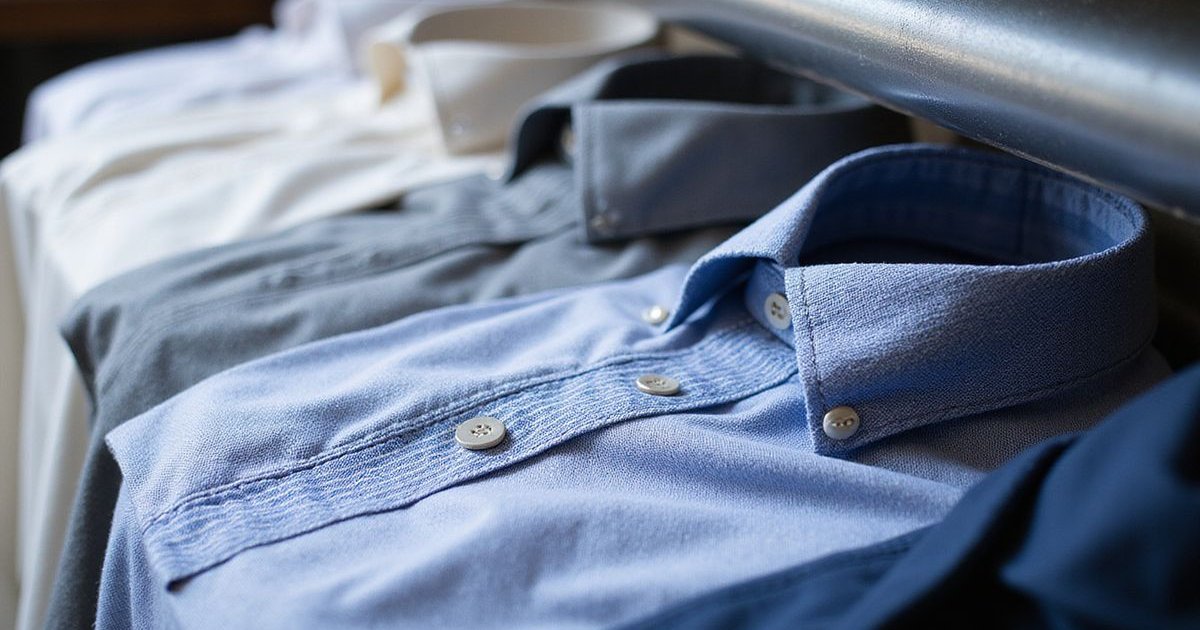
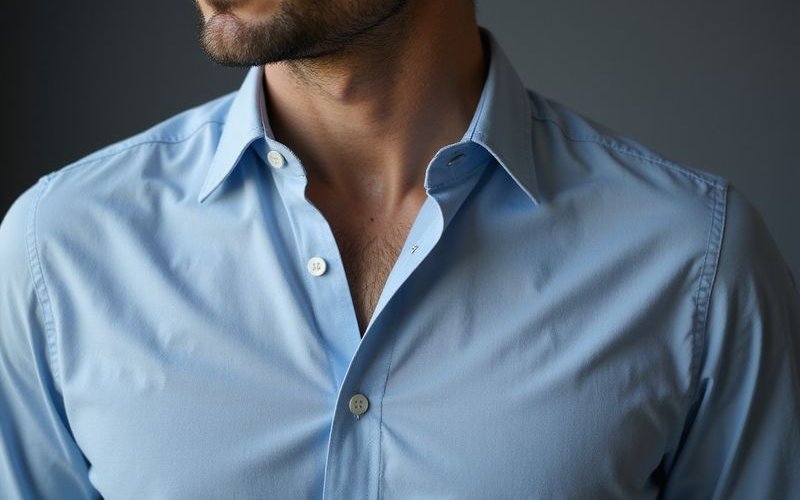
The button-down collar has small buttons fastening the collar points to the shirt body. This American invention (introduced by Brooks Brothers in 1896) was originally designed for polo players to keep collars from flapping in the wind.
We love the “roll” of a high-quality soft button-down—the gentle S-curve the fabric makes as it travels from the collar band to the button. It creates a dimension and shadow that flat, fused collars simply cannot match.
Best for:
- Business Casual: It is the undisputed king of the “no tie” office environment.
- Textured Fabrics: Looks exceptional in Oxford cloth, flannel, or chambray.
- West Coast Style: Fits perfectly with the relaxed professional vibe common in California and tech hubs.
- Layering: The buttons keep the collar standing up under V-neck sweaters or casual jackets.
Considerations:
- Formality Limits: Traditionally, this should not be worn with double-breasted suits or evening wear.
- Knot Restriction: Only small, tight knots work here; anything else looks bulky and forced.
- Fastening Rule: You must always keep the collar points buttoned; leaving them unbuttoned looks like a mistake, not a style choice.
The button-down occupies a unique territory. It is too casual for high-stakes investment banking meetings but perfect for client lunches and daily office wear.
The Club Collar
The club collar features rounded points rather than pointed ones. This style originated at Eton College in the 1850s as a way for students to distinguish themselves, eventually becoming known as the “Eton collar.”
We see this style periodically return to the spotlight, most recently driven by shows like Boardwalk Empire and Peaky Blinders. It is a vintage detail that immediately separates the wearer from the crowd.
Best for:
- Vintage Enthusiasts: It pairs well with tweed jackets, vest suits, and heritage fabrics.
- Softening Features: The rounded edges can help soften a very angular or square jawline.
- Collar Pins: This style was practically made to be worn with a metal collar pin that lifts the tie.
Considerations:
- Availability: You will rarely find this in standard retail stores; it usually requires a custom order.
- Costume Risk: If the rest of the outfit isn’t sharp, it can look like you are wearing a costume.
The Tab Collar
The tab collar includes a small fabric tab with a snap or button that connects the collar points behind the tie knot. This forces the tie forward, creating a dramatic, standing arch.
Our clients often ask about this after seeing Daniel Craig wear it extensively as James Bond in Skyfall and No Time To Die. It creates a very architectural, clean look where the tie knot is the star of the show.
Best for:
- Necktie Devotees: If you love wearing ties, this showcases them better than any other style.
- Formal Events: It looks incredibly polished and deliberate.
- Long Necks: The higher stance and structure can help visually shorten a long neck.
Considerations:
- Tie is Mandatory: You absolutely cannot wear this shirt without a tie; the tabs will flap visibly.
- Fidget Factor: Fastening the small tab behind the tie can be frustrating if you are in a rush.
The tab collar is for the committed dresser who appreciates structure and isn’t afraid of a little extra effort.
Collar Height: The Often-Overlooked Detail
Most off-the-rack shirts come with a standard collar band height of about 1.5 inches. However, the height of your collar band has a massive impact on your comfort and appearance.
We check this measurement carefully:
- Taller Collars (1.75” - 2”): These create a more formal, commanding appearance. They work exceptionally well for men with longer necks, filling the space between the shoulder and jawline.
- Shorter Collars (1.0” - 1.25”): These feel more casual and modern. They are ideal for men with shorter necks, preventing the collar from digging into the chin or folding uncomfortably.
Custom shirts allow you to specify this height to the quarter-inch, ensuring the collar sits in the perfect position relative to your Adam’s apple.
Matching Collar to Face Shape
While personal style ultimately rules, geometry plays a role in what looks “right.” We use this reference table to help clients find their starting point:
| Face Shape | Recommended Collar | Why It Works |
|---|---|---|
| Round | Point Collar | The vertical points draw the eye down, elongating the face. |
| Long/Oval | Spread or Cutaway | Horizontal lines widen the face, balancing length. |
| Square | Club or Semi-Spread | Rounded or moderate styles soften a strong angular jaw. |
| Heart | Semi-Spread | Balances a wider forehead without emphasizing a narrow chin. |
| Diamond | Spread or Cutaway | Widens the jawline visually to match cheekbones. |
Matching Collar to Tie Knots
The size of the collar opening must correspond to the physical size of the tie knot. A mismatch here creates awkward gaps or bunching.
- Large Knots (Full Windsor): These require Spread or Cutaway collars. The wide triangular knot needs space to sit flat.
- Medium Knots (Half-Windsor): These are the most versatile and work with Spread and Semi-Spread collars.
- Small Knots (Four-in-Hand): These suit Point and Button-Down collars. The narrow, asymmetrical knot looks elegant in a smaller opening but looks lost in a cutaway.
The Custom Advantage
Off-the-rack shirts are designed for the “average” man, which means they rarely fit any specific man perfectly. Custom shirts let you control the variables that matter:
- Exact Point Length: We can shorten points to 2.75 inches for a modern look or extend them to 3.25 inches to ensure they stay under your jacket.
- Spread Angle: You can choose the exact degree of spread that flatters your face shape.
- Neck Fit: We measure to the quarter-inch, so you aren’t forced to choose between a collar that chokes you and one that gaps visibly.
At Finch & Co., we’ll help you navigate these choices to build a shirt that complements your face shape, matches your wardrobe, and suits your professional environment. Book a consultation to explore your options.
David Finch
Master tailor with Savile Row training. David brings over a decade of bespoke craftsmanship to every garment.