Caring for Your Custom Suit: A Maintenance Guide
How to properly store, clean, and maintain your bespoke or quality suits. Expert tips to keep your investment looking its best for decades.
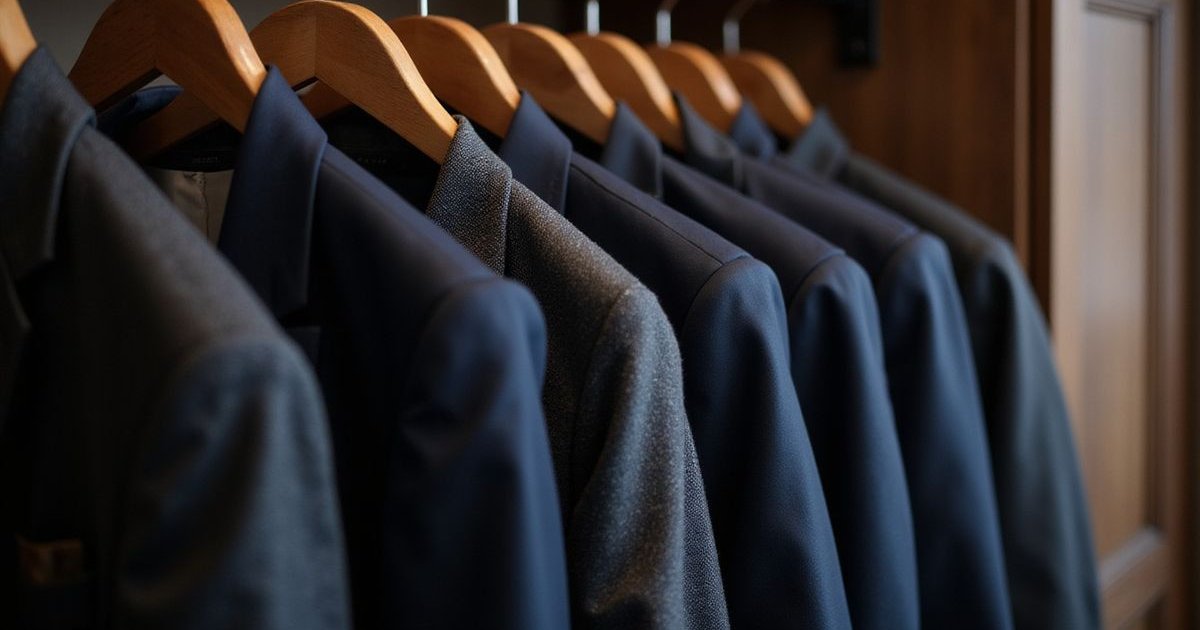
A custom suit represents a significant commitment of resources and trust. We know the feeling of putting on a garment that fits perfectly, and that confidence is worth preserving. From our perspective, the difference between a suit that lasts three years and one that lasts thirty comes down to maintenance, not just construction.
Here is exactly how our team recommends keeping your suits in peak condition.
The Most Important Rule: Rest Your Suits
We advise never wearing the same suit two days in a row. Wool fibers function like tiny springs that need 24 to 48 hours to bounce back to their original shape after being stretched by daily movement.
This recovery period allows the natural lanolin in the fibers to condition the fabric. If you rotate your wardrobe effectively, a collection of three or four suits ensures each one gets the downtime it needs to recover.
Proper Hanging
We often see excellent suits ruined by cheap hangers. The width of your hanger determines the longevity of your jacket’s shoulder construction.
Invest in wide-shoulder hangers: Our team recommends wooden hangers with a shoulder flare of at least 2 to 2.5 inches, such as those from Butler Luxury or The Hanger Project. These provide up to five times more support than standard hangers, which prevents the shoulder pads from collapsing.
Compare the difference:
| Feature | Wire/Standard Hanger | Wide-Shoulder Hanger |
|---|---|---|
| Shoulder Width | 0.5 inches | 2.0 - 2.5 inches |
| Impact on Suit | Digs into fabric, causes bumps | Mimics body shape, supports structure |
| Material | Metal or thin plastic | Solid wood (Beech, Maple) |
| Pant Support | Creates sharp creases | Flocked bar prevents slipping |
Empty the pockets: We suggest removing heavy items like phones and wallets immediately. These weights distort the fabric and can permanently stretch the pocket lining.
Hang trousers properly: Our preference is a hanger with a felted or flocked trouser bar to provide grip without creasing. If you must fold them, drape them at the crease line to maintain the press.
Give suits space: We suggest leaving at least 2-3 inches between garments in your closet. Wool needs airflow to release moisture and prevent mildew.
Brushing: The Forgotten Essential
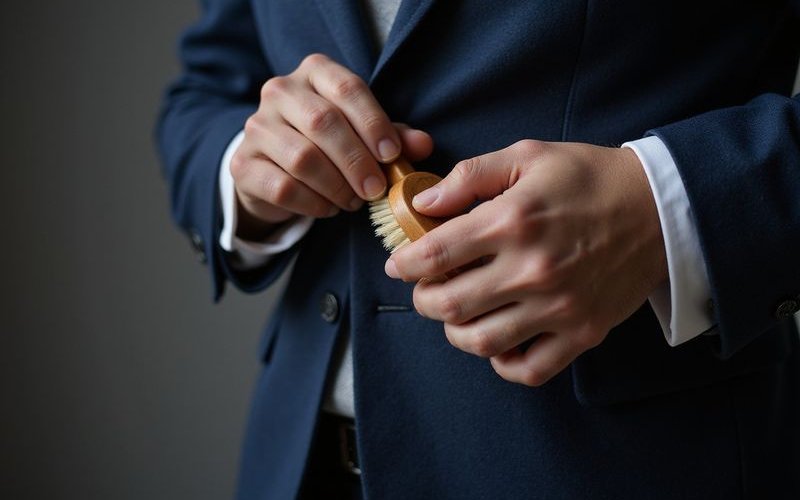
We consider a natural-bristle clothes brush the single most important tool in your care kit. Dust and dirt act like microscopic glass shards that cut through fibers over time.
The Kent Brush Standard: Our experts rely on brushes from makers like Kent (specifically the CC20 model) because the natural pig bristles are firm enough to lift dust but soft enough to protect the cloth. Synthetic brushes often lack the “give” needed for fine wool.
Follow this 30-second routine after every wear:
- Lay the jacket flat or hang it securely.
- Brush against the nap (upwards) first to lift trapped grit.
- Brush with the nap (downwards) to smooth the fibers back into place.
- Target the collar where sweat and hair products accumulate.
This simple habit removes surface debris before it can settle, significantly delaying the need for chemical cleaning.
Spot Cleaning
We urge you to treat spills immediately but carefully. Wool is sensitive to friction when wet, and aggressive rubbing can cause “felting,” where the fibers fuse together permanently.
Water-based stains: Our advice is to blot gently with a clean, white cloth. Work from the outside edge toward the center to prevent a ring from forming.
Oil-based stains: We recommend leaving these to the professionals. Home remedies often set oil stains deeper into the fiber or damage the dye.
General rule: Our team believes that if you are unsure of the stain’s origin, do not guess. A wrong treatment can turn a $20 fix into a ruined jacket.
Dry Cleaning: Less Is More
We find that most people dry clean their suits far too often. The chemical solvents (often Perc) used in the process strip the wool of its natural oils, leaving it brittle and prone to tearing.
The Cost of Over-Cleaning: Our research in California shows that while a quality dry clean costs between $15 and $35, the hidden cost is the reduced lifespan of your garment. Frequent pressing by commercial machines can also flatten the fabric and cause an unsightly “shine.”
Follow this schedule:
- Normal Use: Clean once or twice a year maximum.
- Heavy Use: Clean only when there are visible stains or odors that airing out won’t fix.
- Seasonal: Clean once before long-term storage to prevent moth attraction.
The “Sponge and Press” Secret: We suggest asking your cleaner for a “press only” or “sponge and press” service if the suit is wrinkled but not dirty. This refreshes the shape without exposing the fabric to harsh chemical baths.
Steam, Not Iron
We strongly advocate for using a garment steamer over a traditional iron for home maintenance. Direct contact with a hot iron plate (often 400°F+) crushes the pile of the wool and creates permanent shine marks.
Tools of the Trade: Our workshops use robust steamers like the Jiffy J-2000, but even a quality handheld steamer is safer than ironing. Steam relaxes the fibers gently, allowing them to return to their natural state without compression.
How to steam safely:
- Hang the garment on a stable hook.
- Hold the steamer head 1-2 inches from the fabric.
- Let the steam rise through the wool; do not press the head into the cloth.
- Allow gravity to pull the wrinkles out.
Storing Between Seasons
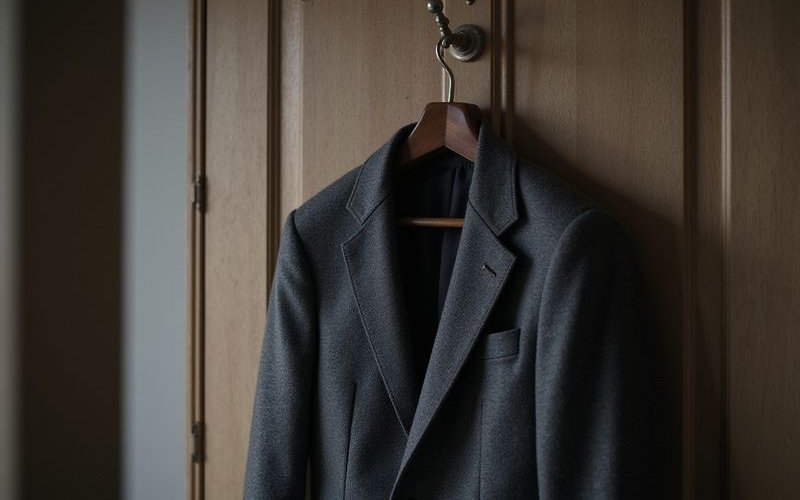
We have seen extensive damage caused by improper storage methods. When putting suits away for the season, the goal is protection from pests and humidity.
-
Clean first: Our rule is to never store a suit with invisible body oils, as these are a magnet for moth larvae.
-
Use breathable bags: We recommend 100% cotton or canvas garment bags. Plastic bags trap moisture and chemicals, which can lead to yellowing and mildew over months of storage.
-
Cedar effectiveness: Our experience is that cedar blocks only repel moths for about 3 months. You must sand them periodically to release fresh oil, or they become ineffective.
-
Climate control: We advise storing suits in a dark, temperature-controlled closet. Avoid attics where heat breaks down fibers and basements where humidity breeds mold.
Travel Care
We know that travel is often when suits suffer the most damage. A few strategic packing techniques can minimize the need for heavy pressing upon arrival.
- The Shoulder Fold: Turn the jacket inside out, pushing one shoulder into the other. This protects the outer fabric and allows the jacket to be rolled gently.
- Carry-On Strategy: We suggest using a dedicated garment bag and asking flight attendants to hang it in the coat closet.
- Hotel Steam: Hang the suit in the bathroom while you take a hot shower. The ambient steam helps relax minor creases from the flight.
When to Seek Professional Help
We encourage you to build a relationship with a skilled tailor, not just a dry cleaner. Some issues require a needle and thread, not chemical solvents.
Structural problems: Our team can fix sagging linings or loose buttons, which are maintenance issues that cleaners cannot address.
Re-weaving: We suggest seeking out a specialist in “invisible mending” or re-weaving if you find a small hole. This complex process weaves new threads into the damaged area and can save a beloved suit.
Alterations: Our bodies change over time. Adjusting the waist or chest of a suit extends its useful life and ensures you always look sharp.
The Reward of Care
We believe a well-maintained suit develops a character that new garments lack. The canvas conforms to your body, and the fabric softens, creating a personalized fit that is impossible to replicate off the rack.
This longevity is the true value of high-quality tailoring.
At Finch & Co., we build suits intended to last for decades. We are always happy to advise on care for suits we’ve made—or to help restore and alter existing garments that deserve continued life. Contact us with any questions about caring for your investment.
David Finch
Master tailor with Savile Row training. David brings over a decade of bespoke craftsmanship to every garment.